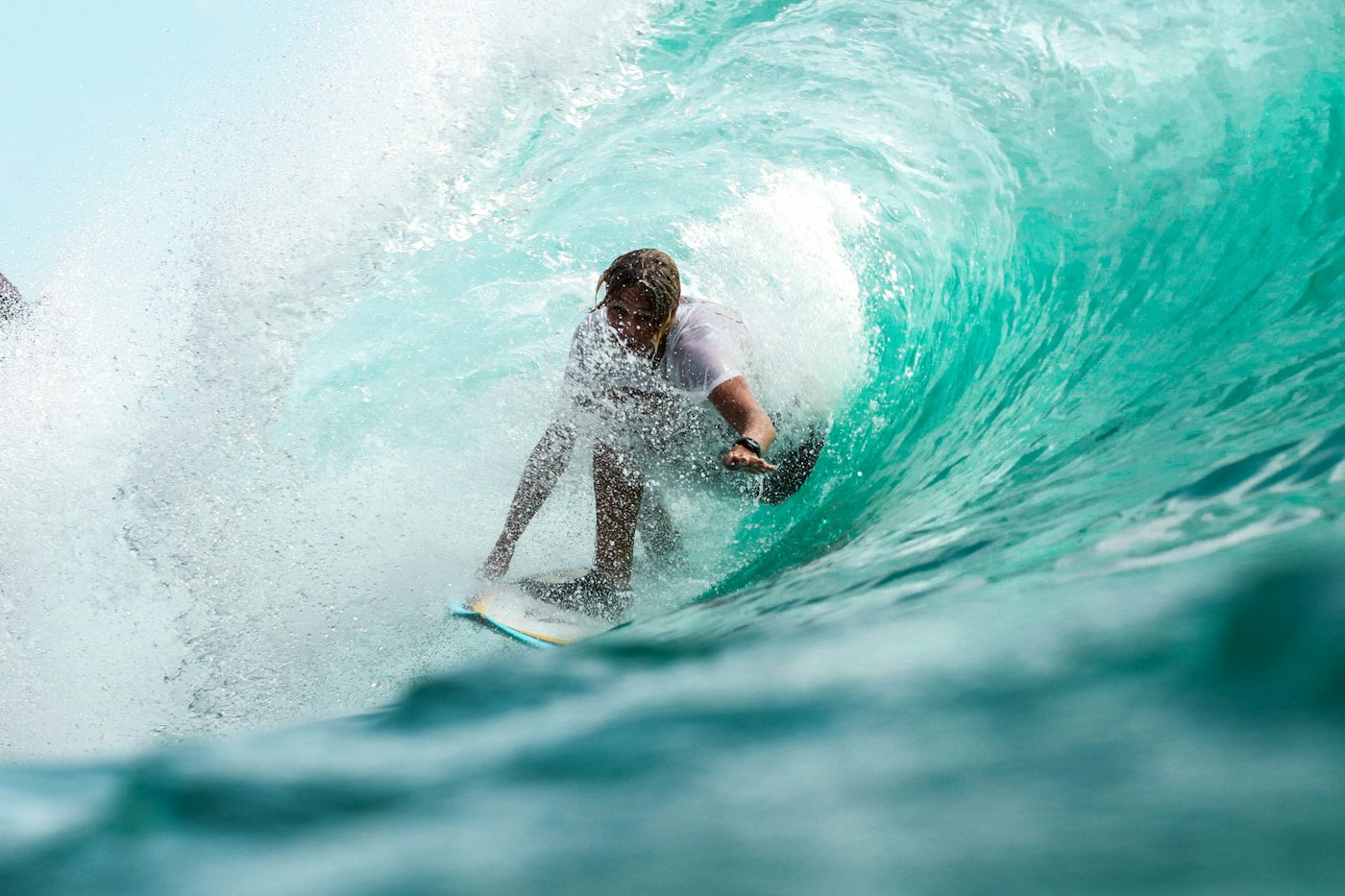
I have a soft spot for the surf community at Kata Beach. Every wet season, the same mix of regulars turns up — mostly Western and Australian expats with genuine surf backgrounds, a few Thai instructors who learnt to surf before the tourists arrived, and a rotating cast of hopeful beginners who've just discovered that yes, Phuket actually has waves. Running a surf school here is one of the more lifestyle-friendly businesses you can build on the island. It is also genuinely seasonal, requires beach access arrangements that sit in a Thai regulatory grey zone, and demands that you think carefully about what the business looks like from November to April when the Andaman goes flat. Here is the honest picture.
Surf School in Phuket — Key Facts
- Surf season: May–October (SW monsoon)
- Best beach: Kata Beach, Kalim (north Patong)
- Startup cost: THB 200,000–400,000
- Group lesson price: THB 1,200–1,800/person
- Business structure: Thai Ltd Co (49% foreign)
- ISA certification recommended for instructors
- Beach permit: informal concession arrangement
- Off-season pivot: SUP, kayaking, snorkelling
Where to Run a Surf School in Phuket
Phuket is not Bali. That needs to be said clearly before you invest a single baht. Bali has year-round surf on multiple coasts. Phuket's surf window is the southwest monsoon season — roughly May through October — when swells roll in from the Indian Ocean and hit the west coast beaches. Outside this period, the Andaman Sea is typically glassy and flat, which is great for diving and snorkelling but useless for surf instruction.
Kata Beach: the surf capital of Phuket
The southern end of Kata Beach has the most consistent beach break on the island. It works on medium southwest swells, is forgiving enough for beginners, and has an established surf culture with several schools already operating. The Kata/Karon area is the natural home for a surf school business. The beach is large enough that multiple operators can coexist without crowding each other out, and the nearby accommodation and restaurant infrastructure creates easy access to the beginner tourist market.
Kalim Beach: the reef break option
Kalim sits at the northern end of Patong Bay, just around the headland. It has a reef break that works well for intermediate surfers when the swell is right, typically over head height and coming from a southwest direction. Kalim is less suitable for absolute beginners (the reef makes wipeouts more consequential) but attracts the intermediate market that is willing to pay a premium for a proper reef break lesson. Operating at Kalim gives your school a more advanced product offering to complement beginner lessons at Kata.
Nai Harn and Rawai: occasional waves, not a base
Nai Harn Beach in Rawai and Nai Harn occasionally catches swell and produces surfable conditions, but it is inconsistent and not a reliable base for a commercial surf school. It is good for personal surfing when it is on, but don't build a school's reputation on it.
Legal Structure for a Surf School in Phuket
Choosing between Phuket's international schools?
BISP, UWC, HeadStart, Kajonkiet — each suits a different family. Curriculum, fees, location, culture fit. A consultation saves you months of school-fair visits and gives you a clear shortlist for your children.
Book a schools consultation →By Fredrik Filipsson — living in Phuket since 2019
Running any commercial business in Thailand as a foreigner requires proper legal structure. Surf instruction is a service business subject to the Foreign Business Act (FBA), which restricts foreign ownership to 49% in most service categories. The standard setup is a Thai Limited Company — a juristic person registered with the Department of Business Development — with 51% Thai shareholders and 49% foreign ownership.
The company formation process
Company formation involves: memorandum of association, shareholder meeting minutes, company registration with DBD, VAT registration (required when turnover exceeds THB 1.8m/year), social security registration for employees, and provincial business registration with the local OrBorTor. Budget THB 20,000–35,000 for a professional company formation service in Phuket. Do not use an online DIY service for a beach-based business — the beach operation permits and water sports licensing require local legal expertise.
Non-B visa and work permit
The foreign founder needs a Non-Immigrant B visa and a work permit issued through the company. Work permit requirements include a minimum of four Thai employees per foreign work permit, THB 2 million registered capital, and tax compliance. The Phuket work permit process takes 2–4 weeks once all documents are in order. Annual cost: approximately THB 15,000–25,000 in government fees plus accounting costs of THB 30,000–70,000/year to maintain a compliant company.
Health Insurance for Surf School Operators
Working in the water means occupational risk. Make sure you have comprehensive health insurance that covers water sports injuries, fractures, and emergency treatment at Bangkok Hospital Phuket.
Get a free quote →Beach Permits and the Kata Beach Concession Reality
This is where the surf school business in Phuket gets complicated, and where a lot of enthusiastic first-timers get a rude awakening. Thai beaches are officially public land, but commercial operations on them require some form of authorisation from local government.
How beach access actually works at Kata
In practice, most surf schools at Kata operate under informal concession arrangements with beachfront restaurants or the umbrella and sunbed concession operators who have established presence on the beach. You pay a monthly arrangement fee — typically THB 5,000–15,000/month — for the right to store boards on their frontage and set up your operations nearby. This is not a formal legal concession from the OrBorTor Ko Kaeo (the local subdistrict administration responsible for Kata Beach); it is a commercial arrangement between private parties that has developed over many years of beach tourism in Phuket.
The formalisation push
Thai authorities have been intermittently pushing to formalise beach commercial operations across Phuket, particularly after the 2016–2017 beach crackdowns that cleared illegal structures from many beaches. A formal beach commercial operation permit is theoretically available through the OrBorTor, but the process is time-consuming and the number of concessions available is limited. The honest advice: before committing capital, spend a surf season at Kata, talk to the existing operators, understand the arrangements that are in place, and get a clear picture of what the concession landscape looks like before you invest. A Phuket-based lawyer with beach operation experience is worth their fee here.
Equipment, Staffing, and Startup Costs
A surf school is more equipment-intensive than many other service businesses. Your board inventory is your primary capital asset.
| Cost Item | Amount (THB) | Notes |
|---|---|---|
| Thai company formation | 20,000–35,000 | One-time, with professional service |
| Non-B visa + work permit | 15,000–25,000/yr | Government fees only |
| Surfboard inventory (12–15 boards) | 60,000–150,000 | Foam learner + fibreglass boards |
| Rash guards + wetsuits (20 units) | 25,000–50,000 | For student use |
| Board storage/beach concession | 5,000–15,000/mo | Monthly arrangement with beachfront operator |
| Website + booking system | 10,000–25,000 | One-time setup |
| Public liability insurance | 15,000–30,000/yr | Water sports operator coverage |
| Thai instructor salary | 18,000–28,000/mo | Per experienced instructor |
ISA certification for instructors
There is no Thai government requirement for surf instructor certification, but the ISA (International Surfing Association) Level 1 certification is the international market standard for teaching beginners. It covers water safety, teaching methodology, and equipment handling. Budget USD 200–400 per instructor for ISA certification. All instructors should also hold a current lifeguard or water rescue qualification — this is both a safety requirement and a liability management essential. First aid certification (EFAS or equivalent) completes the professional safety picture.
Revenue Model and the Seasonal Challenge
The surf school revenue model is straightforward but seasonal. During peak surf season (June–September), you can run multiple lessons per day at Kata with consistent bookings from tourists staying in the Kata/Karon area. During the dry season (November–April), you need a different product.
| Product | Price (THB) | Notes |
|---|---|---|
| 90-min group lesson (4 students) | 1,200–1,800 pp | Core product, May–Oct |
| 90-min private lesson | 2,500–4,000 | Higher margin, serious learners |
| 3-day beginner surf course | 3,500–5,500 pp | Package deal for resort guests |
| SUP rental (dry season) | 300–600/hr | Year-round when flat |
| SUP lesson | 1,500–2,500 | Year-round product |
| Kayak rental | 200–400/hr | Dry-season diversification |
The successful surf schools at Kata have built hybrid businesses — surfing instruction in wet season, paddleboard and kayak rentals in dry season, with some operators adding snorkelling trips using a small longtail boat. This diversification smooths the revenue curve and keeps staff employed year-round, which matters for retaining good Thai instructors.
Need guidance on setting up your water sports business in Phuket?
Our team has helped dozens of expats navigate beach operator permits, company formation, and the Thai business setup process.
Book a free 30-min consultation →Hotel and Resort Partnerships
One of the most effective distribution channels for a Kata-based surf school is a direct commercial relationship with hotels and resorts in the Kata/Karon area. Hotels want to offer surf lessons as an activity option for guests; you want consistent bookings. The arrangement: the hotel refers guests to your school and receives a commission (typically 15–20% of the lesson price). You benefit from the hotel's existing guest flow without paying for advertising.
Hotels in Kata and Karon range from mid-range Thai-owned guesthouses to international branded resorts. The activity desk managers at larger properties (Katathani Phuket Beach Resort, Kata Beach Resort by Metadee, Sugar Palm Grand Hillside) are the key contacts. Provide them with a professional rate card, a commission structure, a safety credentials document (insurance + instructor certifications), and a clear booking process. Building 5–10 hotel relationships generates a meaningful base of bookings that supplements walk-up business.
Marketing Your Surf School
The surf school market in Phuket is not huge — there are perhaps 8–12 operators across Kata, Kalim, and Karon. Google My Business is your most important free marketing tool: a well-optimised GMB listing for "surf school Kata Beach Phuket" drives a meaningful volume of tourist bookings. Get 20–30 genuine Google reviews and you will dominate local search for your area.
Viator and GetYourGuide are the primary OTA platforms for tourist activities in Phuket — listing your school on these platforms adds commission costs (typically 20–25%) but reaches tourists who have already decided they want a surf lesson and are comparing providers. Instagram with consistently good water photography is a longer-term brand builder. The most effective operators combine GMB + Viator/GetYourGuide + hotel partnerships for a diversified booking mix.
See our guide to working and running a business in Phuket for broader context on the Phuket business environment. The Kata and Karon area guide covers the local community, accommodation, and tourist demographics that are your target market.
