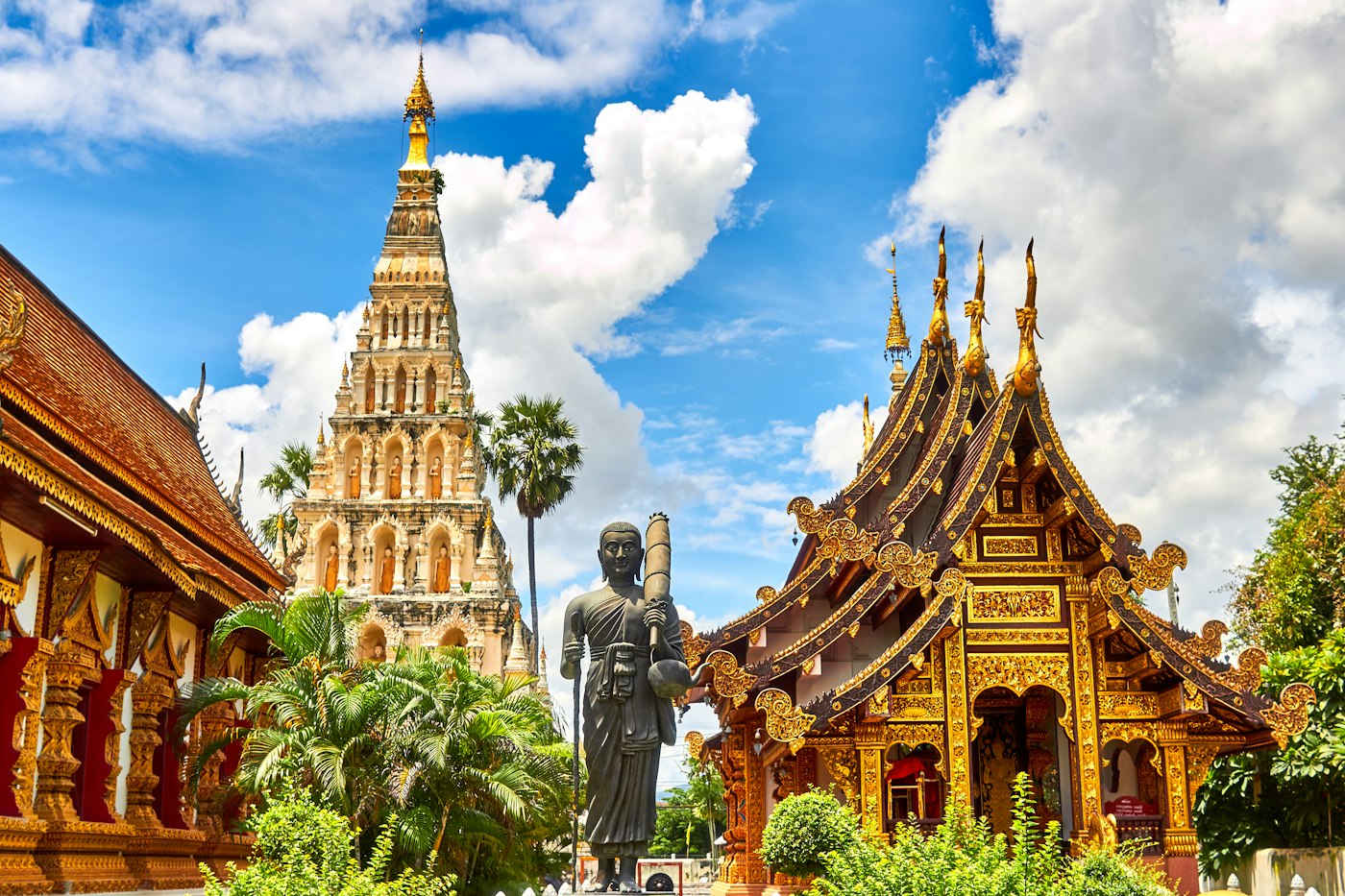
📿 Quick Facts: Religion in Phuket
- ~93% of Thailand's population is Theravada Buddhist
- Phuket has a significant Hokkien Chinese Buddhist tradition (Vegetarian Festival, shrines)
- Kamala is home to a sizeable Muslim community — one of the most integrated on the island
- Multiple Christian churches including English-language services at Phuket International Church (Bang Tao)
- The Vegetarian Festival (Tesagan Gin Je) runs for 9 days every October
- Spirit houses (San Phra Phum) appear outside virtually every Thai home and business
Religion in Phuket is woven into daily life in a way that many Western expats find initially surprising, then quietly grounding. After seven years here, I no longer think twice about seeing monks collecting alms at 6am on Sai Yuan Road, or hearing the evening bells carry from Wat Chalong across the Chalong Plain. It's part of what makes Phuket feel like a place rather than just a destination.
This guide isn't about converting to anything. It's about understanding the spiritual landscape of the island — what's happening at the temple up the road, why there's a shrine at every shopfront, what that yellow flag means, and where you can find your own spiritual practice, whatever that looks like for you.
Phuket's Spiritual Landscape
Theravada Buddhism
The official religion of Thailand. Characterised by the Pali canon, orange-robed monks, temple merit-making, and daily alms rounds. Focused on personal liberation through the Noble Eightfold Path.
Main sites: Wat Chalong, Big Buddha, Wat Phra Thong (Thalang)
Hokkien Chinese Buddhism
Phuket's Hokkien Chinese community blends Mahayana Buddhism with Taoism and ancestor veneration. Most visible during the October Vegetarian Festival, which originated here and is more intense in Phuket than anywhere else in Thailand.
Main sites: Jui Tui Shrine (Ranong Rd), Bang Neow Shrine (Phang Nga Rd)
Islam
About 25–35% of Phuket's population is Muslim, mainly in Kamala, areas of Thalang, and southern villages. Phuket's Islam is moderate and culturally integrated. Kamala's main mosque (Masjid Mukaram) is one of the largest on the west coast.
Key areas: Kamala, Koh Sirey, Rawai fishing village
Christianity & Others
A small but active Christian community with English-language services. Phuket International Church (Bang Tao) meets on Sundays. Catholic Mass at Phuket Town's Cathedral of the Immaculate Conception. Small Hindu and Sikh communities near Phuket Town.
Key site: Phuket International Church, Bang Tao
Phuket's Major Buddhist Sites
Phuket has over 40 Buddhist temples (wats). Most are active community centres, not tourist attractions — though several have become both. Here are the ones that matter most for expat residents.
| Temple | Location | Character | Entry |
|---|---|---|---|
| Wat Chalong | Chalong, south Phuket | Largest and most-visited. Grand chedi, revered monk statues (Luang Pho Cham), merit-making crowd. Vibrant, incense-heavy, constantly busy. | Free |
| Big Buddha (Phra Phut Mingmongkol) | Nakkerd Hills, between Chalong and Kata | 45-metre white marble Buddha visible from much of south Phuket. Quieter than Wat Chalong, atmospheric especially at dawn or dusk. Active construction of surrounding complex continues. | Free |
| Wat Phra Thong | Thalang, north Phuket | The "Gold Leaf Temple" — famous for its semi-submerged golden Buddha image. Legend says those who tried to excavate it met misfortune. Quieter and more authentic than the south-Phuket sites. | Free |
| Wat Srisoonthorn | Cherng Talay, Bang Tao area | Beautiful chedis, well-maintained, less touristed. The local community temple for the Bang Tao/Laguna area. A good place to experience everyday Thai Buddhism without crowds. | Free |
| Wat Luang Por Chaem | Rawai, south Phuket | Community temple serving the Rawai/Nai Harn expat-heavy area. Small, genuine, and active. Worth visiting during morning alms rounds (5:30–6:30am). | Free |
💡 Insider Tip: Temple Etiquette
Always cover shoulders and knees — most temples have sarong rentals for ฿30–50 if you forget. Remove shoes before entering any building with a Buddha image. Don't touch monk statues, and women should never hand anything directly to a monk. Photography is generally fine in outdoor areas but read the room inside chapels — prayers in progress deserves silence and no phones.
The Vegetarian Festival (Tesagan Gin Je)
This is the event that makes Phuket's spiritual life unmissable, even for secular expats. Every October — dates shift annually based on the Chinese lunar calendar — the island transforms for 9 days around its Chinese Hokkien shrines.
What actually happens: Participants follow a strict vegan diet, dress in white, and visit shrines to accumulate merit. Street processions carry deity statues through the town. The element that draws international media: mah song (mediums) pierce their faces and bodies with skewers, blades, and all manner of objects in a state of trance, believed to demonstrate their spiritual protection and transfer merit to spectators.
As a resident, my honest take: The first procession I watched in Phuket Town on Ranong Road was genuinely unlike anything I'd encountered. It's not performed for tourists — the crowds watching are mainly locals and Chinese-Thai families. There's incense, firecrackers (very loud, bring earplugs), and an atmosphere of genuine spiritual intensity. Go with an open mind and keep a respectful distance from the mah song.
📅 Vegetarian Festival 2026 — Practical Info
- Dates: Approximately 19–27 September 2026 (lunar calendar — confirm closer to time)
- Best location: Phuket Town — specifically Ranong Road (Jui Tui Shrine) and Phang Nga Road (Bang Neow Shrine)
- Processions: Start around 7–9am, check local notices — the timing varies by shrine
- Food: Jay (เจ) food vendors everywhere — look for yellow flags. The Vegetarian Festival period has the best and cheapest Jay food of the year
- Noise warning: Firecrackers are deafening. Earplugs recommended if you're sensitive
- Photography: Fine, but stay back, don't crowd the mah song, and never touch them or block their path
Meditation & Retreats in Phuket
Phuket isn't a major meditation destination in the way Chiang Mai or Koh Phangan are, but there are solid options for both casual and serious practice.
| Option | Location | Type | Cost |
|---|---|---|---|
| Atmanjai Wellness | Rawai, Viset Road | Detox/retreat centre with mindfulness, yoga, meditation. Week-long programmes with daily structured practice. Not Buddhist — secular wellness framework. | ฿18,000–80,000+/week |
| Dipabhavan Meditation Centre | Cherng Talay, north Phuket | Secular vipassana-inspired meditation in a forest setting. Quiet, genuine. Less polished than commercial retreats — which is the point. | ฿1,500–3,000/day |
| Wat Chalong sessions | Chalong | Informal — check the noticeboard at the temple entrance for announcement of English-language meditation or dhamma talks. These come and go depending on visiting teachers. | Free (dana) |
| Absolute Yoga / studio classes | Multiple (Boat Avenue, Central Festival) | Many yoga studios offer mindfulness and meditation components. Not strictly Buddhist, but a practical entry point for a daily practice. | ฿300–600/class |
| Sumalee Boxing & Yoga | Rawai, Sai Yuan Road | Strong yoga and meditation programme alongside Muay Thai. Good for expats who want a physical and mental practice in one place. | ฿350–500/session |
Spirit Houses, Monks & Daily Ritual
Living in Phuket means encountering Buddhist ritual outside temples too. Here's what you'll see regularly and what it means.
Spirit houses (San Phra Phum): The miniature house-like shrines outside every Thai home, shop, and hotel are offerings to the resident spirit of the land. You'll see fresh jasmine garlands, incense, food offerings, and small elephant figurines placed daily. They're not decorative — they're maintained with genuine care. Never disturb them, move them, or let a shadow fall over them during a ritual.
Alms rounds (tak bat): Between 5:30 and 6:30am in residential areas, orange-robed monks walk in silence accepting food offerings from local households. In Rawai, you'll see this on Sai Yuan Road. In Bang Tao, it happens near the Srisoonthorn temple. Observers should remain silent and, if you want to participate, buy prepared alms trays from local markets — don't give packaged Western food.
Temple celebrations (wan phra): Buddhist holy days fall on full moon, new moon, and quarter-moon days each month. On these days, locals visit temples, monks receive special attention, and alcohol sales are officially restricted (enforced with varying strictness). The major celebrations — Makha Bucha (February), Visakha Bucha (May/June), and Asanha Bucha (July) — see significant temple activity and sometimes daytime road closures near major wats.
⚠️ Alcohol Restrictions on Buddhist Holidays
On Thai Buddhist holidays (wan phra + the four major Buddhist days), alcohol sales are prohibited by law. Supermarkets, convenience stores, and most restaurants won't serve alcohol from midnight to midnight. Some resort bars and private clubs operate differently. New Year and Songkran are NOT covered by this rule — only Buddhist religious days.
Non-Buddhist Religious Communities
Phuket's diversity extends well beyond Buddhism. For expats seeking their own faith community, here's what's available.
Phuket International Church
Non-denominational English-language services in Bang Tao. Sunday mornings. Active expat community with social events, small groups, and family programmes.
Bang Tao / Cherng Talay area. Check Facebook for current service times.
Cathedral of the Immaculate Conception
Phuket Town's Catholic church, built in the early 19th century — one of the island's oldest Western buildings. Thai-language Mass daily; English Mass announced periodically.
Yaowarat Road, Phuket Town
Masjid Mukaram, Kamala
The central mosque serving Kamala's substantial Muslim community. Friday prayers draw significant attendance. The Kamala community is generally welcoming — living near the mosque means respectful behaviour during prayer times (five times daily) is appreciated.
Kamala village centre
Sri Mahamariamman Temple
A small Hindu temple near Phuket Town serving the island's South Indian Tamil community. Open for worship; visitors welcome to observe respectfully. Colourful gopuram tower is visible from the street.
Near Phuket Town centre
💡 Practical Note for Muslim Expats
Phuket has excellent halal food options, particularly in Kamala, Rawai fishing village, and Phuket Town. Bang Tao and Cherng Talay have growing halal restaurant options. Most large Makro, Tops, and Big C stores carry halal-certified products. During Ramadan, Phuket Town's Thalang Road area has excellent evening iftar food stalls.
Spiritual Life as a Long-Term Resident
After seven years, what I'd say to new arrivals is this: you don't have to be Buddhist to benefit from the spiritual texture of life here. The rhythm of alms rounds, the smell of temple incense drifting into your garden, the quiet of the Big Buddha at dawn before the crowds arrive — it's a form of environment that many people find steadying.
A few things that resident expats often discover over time:
Making merit: Contributing to temple fundraisers, buying food for alms rounds, or simply donating to the donation box at a wat is a normal act of community participation in Thai culture — not necessarily a declaration of Buddhist faith. Most Thai neighbours appreciate it when foreign residents engage respectfully.
The Hokkien connection: Phuket's Chinese Buddhist heritage is distinct from central Thai Buddhism. If you're living in Phuket Town or areas with Chinese-Thai communities, you'll encounter a different visual language — red and gold shrine aesthetics, incense coils in Chinese style, and a calendar oriented around Chinese festivals as much as Thai ones.
Quiet before the noise: The best time to visit any major temple in Phuket — Wat Chalong, Big Buddha — is before 9am. You'll be sharing the space with genuine worshippers, monks, and a handful of other residents rather than tour buses. Bring your own quiet and you'll get something real in return.
Plan Your Life in Phuket
Use our free cost calculator to see what living here would cost for your lifestyle — from budget solo to full family.
