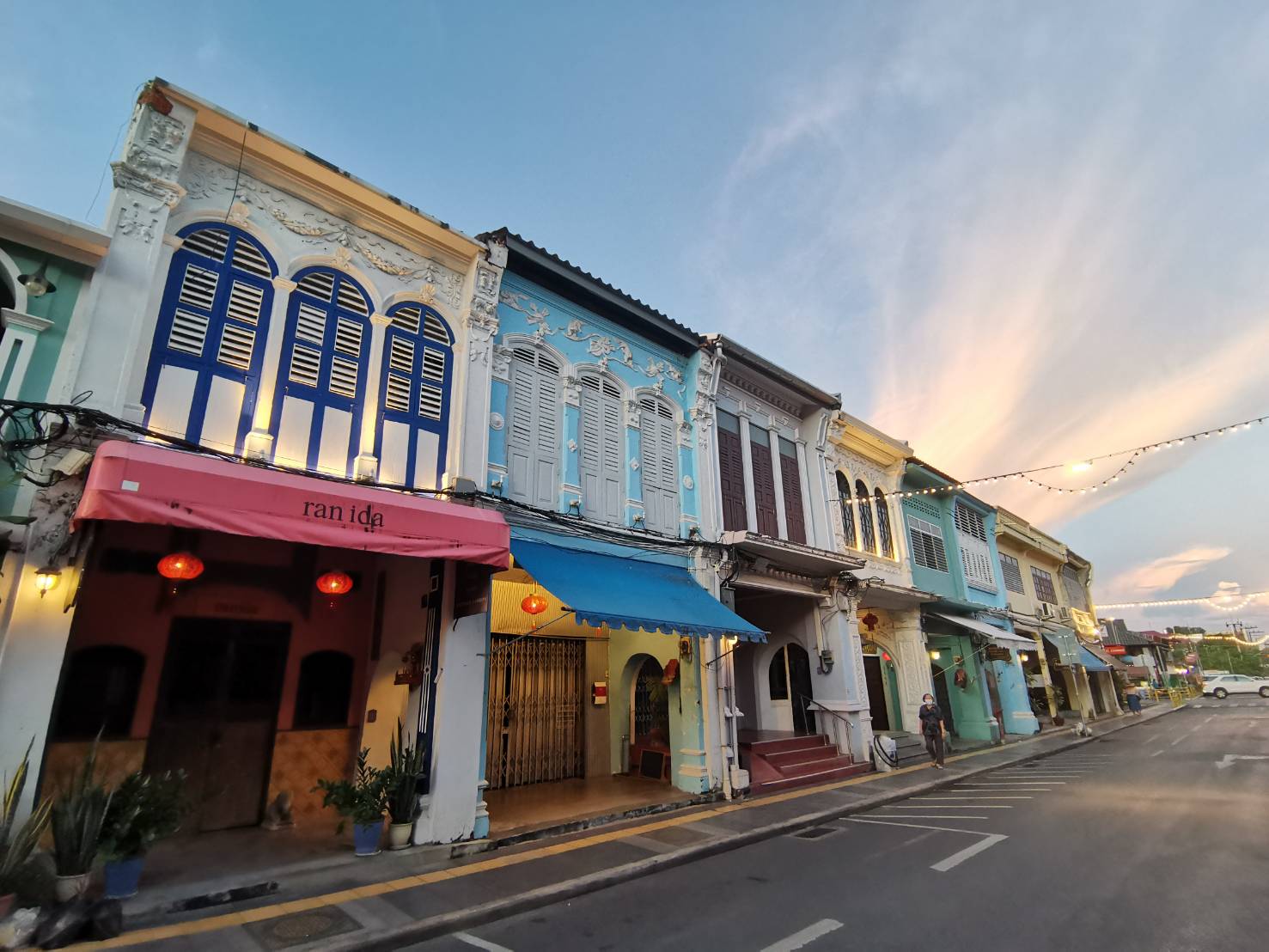
Most people who visit Phuket spend their entire time between the beach and the pool bar, never realising there's a genuinely world-class historic district 30 minutes from every major beach. Phuket Town's Old Town — sometimes called the Sino-Portuguese quarter — is one of Southeast Asia's best-preserved 19th-century trading districts, and walking it properly is one of the best free experiences on the island.
I've walked these streets hundreds of times over six years and I still find things I haven't noticed before. The architecture is extraordinary — colonnaded shophouses painted in pastels and terracottas, Chinese clan houses, Portuguese-influenced mansions now converted to boutique hotels, and temples that have been continuously active for over 200 years. Here's the self-guided tour that actually does it justice.
Phuket Old Town — Quick Facts
The Main Streets of Phuket Old Town
The core of Phuket Old Town is a roughly 1km × 0.5km grid of streets that you can walk entirely in an afternoon. Each street has its own character and its own highlights.
Thalang Road
This is the heart of it. Thalang Road runs east-west through the old town and is lined on both sides with beautifully maintained Sino-Portuguese shophouses — two and three storeys, with colonnaded ground floors (called "five-foot ways" — arcaded walkways that provide shade), intricate tile work, and coloured facades that photograph spectacularly in morning light. The buildings house a mix of café-restaurants, art galleries, traditional pharmacies, and small boutique hotels. Walk the full length — it's about 600m from end to end.
Sunday evenings on Thalang Road transform the street into the Phuket Sunday Walking Street — food stalls, local handicrafts, live music, and street performers from around 5pm to 10pm. If you're in Phuket on a Sunday, this is worth a specific visit.
Dibuk Road
One block south of Thalang, Dibuk Road has some of the most colourful and Instagram-friendly restored facades in the old town. The Dibuk–Phang Nga Road corner is particularly photogenic — a cluster of restored pastel buildings that look like they belong in a different century. Several well-regarded restaurants are on Dibuk Road, including establishments that have been serving Phuket-style food for decades.
Phang Nga Road
The grandest street in Phuket Town. Phang Nga Road has the largest Sino-Portuguese mansions — former bank headquarters, clan association buildings, and merchant houses that reflect the extraordinary tin-mining wealth of 19th and early 20th century Phuket. The old Standard Chartered Bank building (now converted to a boutique hotel) is a remarkable structure. The Phuket Philatelic Museum and several government offices are housed in restored colonial buildings along this street.
Krabi Road and Ranong Road
Krabi Road connects the old town to the main commercial district and passes the Put Jaw Chinese Shrine — one of the oldest Chinese temples in Phuket, dating to over 200 years. The shrine is small but continuously active; remove shoes before entering and be respectful of worshippers. Ranong Road marks the northern edge of the old town area and connects to the traditional fresh market (open from around 5am) — a great place to start a morning walk before the old town streets open up.
Self-Guided Walking Route: Step by Step
-
1
Park near Ranong Road market (8am)
Start early. There's parking near the Ranong Road fresh market. Grab a traditional Phuket breakfast from one of the market stalls — o-tao (oyster omelette), dim sum, or khanom jeen with nam ya sauce. Budget 50–100 THB. Market stalls are open from 5am, busiest 7–9am.
-
2
Walk east along Thalang Road
Enter Thalang Road from the west end and walk east, staying on the shaded arcade side. Stop at the blue "Phuket Old Town" mural wall — it's a worthwhile photo stop. Explore the small side sois (lanes) off Thalang — several have art installations and murals that change seasonally.
-
3
Visit Put Jaw Shrine on Krabi Road
Detour south to Krabi Road for the Put Jaw Chinese Shrine. The shrine is small but its age and continuous use make it one of the most authentic places in Phuket. Go early morning to see active worshippers. Free to enter; donations welcome.
-
4
Dibuk Road and coffee break
Walk along Dibuk Road and stop for coffee at one of the old town's coffee shops — several are installed in beautifully restored shophouses. A good coffee shop on Dibuk or the adjacent Phuket Road area is one of the better café experiences on the island. Expect to pay 80–150 THB for a specialty coffee.
-
5
Phang Nga Road grand buildings
Walk north to Phang Nga Road and the grand colonial buildings. The old Standard Chartered Bank building is on the corner of Phang Nga and Phuket Road. Walk the full length of Phang Nga Road to see the variety of architectural styles — pure Portuguese colonial, Sino-Portuguese fusion, and Chinese clan house styles all exist within a few hundred metres.
The old town looks completely different at different times of day. Morning is best for photography (soft light, shadows on the facades, active traditional businesses). Sunday evening Walking Street is best for food and atmosphere. The worst time to visit is 11am–2pm in high season — it's genuinely uncomfortable hot, full of tour groups, and the beautiful architectural shadows have disappeared in overhead midday light.
Food and Coffee in Phuket Old Town
The old town has become one of Phuket's best dining areas over the past decade — a combination of traditional Phuket cuisine at institutions that have been here for generations, and newer café-restaurants that have invested in the Sino-Portuguese buildings and created genuinely good food experiences.
Traditional Phuket Cuisine
The food you should eat in Phuket Old Town is Peranakan (Baba-Nonya) and traditional Southern Thai — a unique blend that reflects the island's Chinese-Malay heritage. Look for: Oh Tao (oyster pancake with sweet potato starch), Mee Hokkien (yellow noodles in thick sauce), Dim Sum at the old Chinese establishments, Poh Pia Sod (fresh spring rolls), and O-Aew (shaved ice with red beans and syrup — a Phuket specialty found almost nowhere else in Thailand). Prices are low — a proper Phuket breakfast is 60–120 THB.
Coffee Culture
Phuket Old Town has a proper specialty coffee scene — multiple independent cafés in restored shophouses serving excellent pour-over, cold brew, and espresso drinks. Several roasters source Thai-grown Arabica. This is a very different experience from the resort coffee at your hotel. Budget 80–160 THB for specialty coffee. Many cafés also serve Phuket-style snacks — the combination is excellent.
Living in Phuket Town?
Phuket Town is an underrated base for expats — lower rents than the beach areas, genuine local community, and the old town on your doorstep. See our housing guide for area-by-area rental prices.
Phuket Housing Guide →What to Know Before You Go
- Wear comfortable shoes: The old five-foot-way arcades have uneven tile and raised edges — flip flops are fine but watch your step.
- Dress modestly for shrines: Shoulders and knees covered if entering any temple or shrine. Sarongs are sometimes available to borrow.
- Cash for market food: Traditional market stalls and older food shops are cash-only. Bring 300–500 THB in small notes.
- Heat management: The colonnaded arcades provide shade but it's still hot. A folding fan (30–50 THB at the market) and water are worth carrying.
- Getting there: Grab (Thailand's Uber equivalent) from Patong or Rawai is 150–250 THB. Parking near the market is free on weekdays. Sunday Walking Street parking is chaotic — Grab strongly recommended.
Considering Phuket Town as your base?
Many expats are discovering it's one of the island's best-value areas. We can help with housing searches, visa advice, and the practicalities of settling in.
Frequently Asked Questions
What is the best street in Phuket Old Town?
Thalang Road is the most famous and most photographed — colourful Sino-Portuguese shophouses, cafés, and galleries. Dibuk Road has the most beautifully restored facades. Phang Nga Road has the grandest colonial buildings. Walk all three if you have time.
When is the best time to visit Phuket Old Town?
Early morning (8–10am) on weekdays for the best light, manageable temperatures, and traditional businesses open. Sunday evening (5–10pm) for the Walking Street food and atmosphere. Avoid 11am–2pm — hot, busy, and the light is terrible for photography.
How long does the Phuket Old Town walking tour take?
A casual walk covering the main streets takes 2–3 hours. With a proper lunch and browsing, plan for 4–5 hours. The core area is compact — roughly 1km × 0.5km.
Are there guided tours of Phuket Old Town?
Yes — guided walking tours run 2–3 hours, costing 500–1,200 THB per person. The historical and architectural context a good guide provides is worth it for first-time visitors. Check TripAdvisor or the Phuket Old Town Foundation Facebook page for current operators.
What should I eat in Phuket Old Town?
Oh-tao (oyster omelette), Mee Hokkien noodles, Phuket-style dim sum, khanom jeen (rice noodles with curry), and O-Aew (shaved ice with red beans) — a Phuket specialty. The Sunday Walking Street has excellent street food. Expect 60–150 THB for traditional dishes.
Related Guides
- Living in Phuket Town: Expat Area Guide
- Phuket Old Town at New Year: What to Expect
- Meeting Other Expats in Phuket
- Phuket Lifestyle Hub
- Start Here: New to Phuket?
Also useful: Phuket Town's street art and murals.
Affiliate Disclosure: Some links on this page are affiliate links. If you purchase or sign up through them, we may earn a small commission at no extra cost to you. This helps keep the guide free for all Phuket expats.