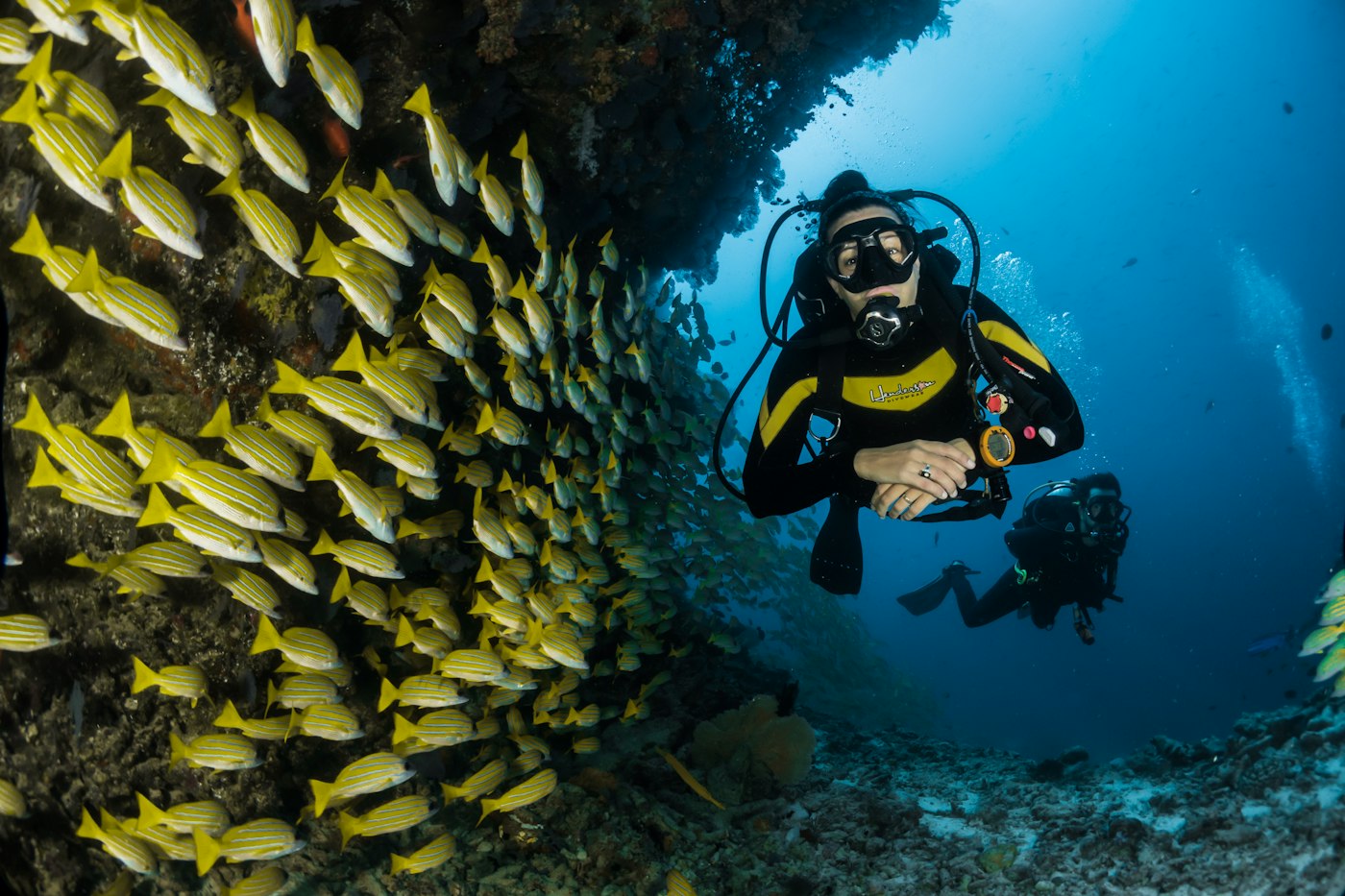
Phuket has been a world-class dive destination since the 1980s, and Chalong Pier on a busy morning — speedboats loading tanks, wetsuits drying on railings, the smell of neoprene and sunscreen — still has a particular energy that makes you understand why people uprooted their lives to move here and run a dive shop. Shark Point, the King Cruiser wreck, Richelieu Rock, the Similan Islands — within an hour's boat ride from Chalong, you have some of the best diving in Asia.
But running a dive business in Phuket involves multiple regulatory layers: PADI or agency affiliation, Thai business law, Marine Department vessel licences, work permits for foreign instructors, and TAT tour operator requirements. Miss any one of these and you're operating illegally — and in an industry where safety and credibility are everything, that's not a risk worth taking.
Key Facts: Phuket Dive Shop Setup
- PADI Dive Center: requires PADI Instructor on staff + annual audit
- Own boats need Marine Dept registration + annual inspection
- TAT Type B licence required for dive trips as tour operations
- Foreign instructors: Non-B visa + work permit required
- Basic dive centre setup (no boat): THB 500,000–900,000
- With own vessel: add THB 500,000–2 million
- Best dive departure hubs: Chalong, Rawai, Ban Rong (Bang Tao)
- High season: Nov–Apr (Andaman). Low season: May–Oct (rough seas)
PADI Affiliation vs. Other Dive Agencies
Phuket is PADI territory. Globally, PADI certifies more divers than all other agencies combined, and in Phuket specifically, most customers arriving at a dive desk will ask "Are you PADI?" — because that's the only certification brand they've heard of. SSI (Scuba Schools International) has made significant inroads in recent years and several quality Phuket shops run on SSI. NAUI and SDI/TDI have smaller market share but dedicated followings.
The practical difference is that operating as a PADI Dive Center or PADI Resort gives you access to PADI's global marketing platform, the PADI dive shop locator (which drives significant direct bookings), and the credibility signal that the majority of your customers will recognise. To become a PADI Dive Center, your shop must have at least one PADI Instructor employed (not just contracted), pass a PADI audit of your facility and equipment standards, and pay annual PADI membership fees (approximately USD 800–1,200/year depending on your membership tier).
Marine Department Requirements for Phuket Dive Boats
This is the layer that many new dive operators underestimate. If your business operates its own dive boats — speedboats, dive dhows, or larger dive vessels — each boat needs to be registered and licensed by the Marine Department (กรมเจ้าท่า). The Phuket Marine Office is on Thanon Na Muang in Phuket Town.
Vessel Registration Requirements
Every commercial vessel needs a vessel registration certificate, a builder's certificate or import documentation, an annual seaworthiness inspection certificate, and proof of vessel insurance. Commercial passenger vessels (carrying paying customers) additionally need a passenger licence specifying maximum passenger capacity, a fire safety inspection certificate, and a Marine Department-licensed captain (นายเรือ) in command for every commercial voyage.
Captain Licence Requirements
The person captaining your dive boat for commercial trips must hold a Thai Marine Department captain's licence (ใบประกอบวิชาชีพ). Foreign nationals can hold this licence — it requires completing an approved marine training course and passing a Marine Department examination. The process takes approximately 3–4 months. Most dive shops hire a Thai licensed captain and/or have the foreign owner obtain the certification if they intend to captain themselves.
Business Structure and Licensing Compliance
Company Registration
Your dive shop needs a registered Thai company with business objects covering dive instruction, equipment sales/rental, and tour operations. Dive instruction as a professional service has FBA implications — most expat dive shop owners operate under Thai-majority structures. See our guide on company registration in Phuket for the full process. Budget THB 25,000–50,000 for professional fees.
TAT Tour Operator Licence
If your dive shop runs organised dive trips (which it almost certainly does), you need a TAT Type B licence. See our guide to Phuket tour operator licensing for the full requirements. This requires a THB 200,000 bond and paid-up capital of at least THB 1 million. Several Phuket dive shops sidestep this by operating purely as dive instruction centres and booking third-party chartered boats — but this limits your operational flexibility.
Work Permits for Foreign Instructors
Foreign dive instructors working in Phuket need Non-B visas and Thai work permits — dive instructor is an allowable profession under the Alien Employment Act. This is genuinely enforced, particularly at Chalong Pier where immigration and labour officers conduct periodic checks. The individual instructor and the employing shop both face fines for illegal employment. Work permit applications typically take 3–4 weeks after visa approval.
Health Insurance for You and Your Dive Shop Staff
As a dive operator, health insurance that covers dive-related injuries — including DCS (decompression sickness) treatment at Phuket's hyperbaric chamber at Bangkok Hospital Phuket — is essential. Cigna Thailand offers plans with medical evacuation coverage from THB 15,000/year.
[AFFILIATE_CIGNA_HEALTH] Compare health insurance in Phuket →Dive Shop Startup Costs in Phuket
| Cost Item | Basic Centre (No Boat) | Full Operation (With Boat) |
|---|---|---|
| Company registration & legal | THB 40,000–70,000 | THB 40,000–70,000 |
| TAT licence + bond | THB 215,000–225,000 | THB 215,000–225,000 |
| PADI affiliation (first year) | THB 30,000–45,000 | THB 30,000–45,000 |
| Equipment inventory (15 students) | THB 150,000–300,000 | THB 150,000–300,000 |
| Compressor | THB 80,000–180,000 (or rental) | THB 80,000–180,000 |
| Shop fit-out & signage | THB 50,000–150,000 | THB 50,000–150,000 |
| Boat (used speedboat) | N/A | THB 500,000–1,500,000 |
| Marine Dept registration | N/A | THB 20,000–40,000 |
| Working capital (3 months) | THB 150,000–250,000 | THB 200,000–350,000 |
| Total estimate | THB 715,000–1,220,000 | THB 1,285,000–2,860,000 |
Phuket's Andaman dive season runs November to April — the rest of the year, the west coast can get rough and many dive shops either close or dramatically reduce operations. The shops that survive and thrive year-round have diversified revenue: PADI instructor development courses (IDC) during shoulder season, equipment servicing, freediving courses (which can run in calmer conditions), and liveaboard booking partnerships for sites that are accessible even in the low season. Plan your revenue model for 12 months, not just the high season.
Ready to Open Your Phuket Dive Shop?
Our directory includes business lawyers, Marine Department specialists, and dive industry consultants. We can connect you with the right people for every stage of your setup. First question is free.
Ask us a question → Find a business consultant →Frequently Asked Questions
Do I need a PADI affiliation to run a dive shop in Phuket?
You do not legally need PADI affiliation — other agencies like SSI and NAUI are equally valid. However, PADI is the dominant certification brand in Phuket and most customers actively look for PADI shops. Operating as a PADI Dive Center requires passing a PADI audit and maintaining minimum Instructor staff ratios. Without any major agency affiliation, building customer trust is significantly harder.
Can a foreigner own a dive shop in Phuket?
Most expat-owned dive shops in Phuket operate under Thai-majority company structures (51% Thai, 49% foreign). Foreign diving instructors who are employed by or own the company can work legally with a Non-B visa and work permit, as dive instructor is an allowable profession for foreigners under the Alien Employment Act.
What Marine Department licences does a Phuket dive shop need?
Any dive shop operating its own boats needs vessels licensed by the Marine Department. Each vessel needs registration, an annual seaworthiness inspection, a licensed captain, and required life-saving equipment. Commercial passenger vessels additionally need a passenger vessel licence. The Phuket Marine Office is on Thanon Na Muang in Phuket Town.
What are the best locations for a dive shop in Phuket?
The primary dive departure hubs are Chalong Pier (closest to Shark Point, Anemone Reef, King Cruiser wreck), Rawai Pier, and Ban Rong Pier in Bang Tao for Similan Islands liveaboards. Chalong has the highest dive-day foot traffic. Kata and Karon attract walk-in resort guests.
How much does it cost to open a dive shop in Phuket?
A basic dive shop without own vessel can be set up for THB 500,000–900,000. Adding your own dive boat increases setup costs by THB 500,000–2 million. Annual operating costs for a 3-staff dive centre without own vessel: approximately THB 80,000–140,000/month.
Do dive instructors need a work permit in Phuket?
Yes. Foreign dive instructors working in Phuket require a Non-Immigrant B visa and a Thai work permit. Dive instructor is an allowed occupation for foreigners under the Alien Employment Act. The work permit must be obtained before teaching any paid courses. Many dive shops employ foreign instructors on tourist visas — this is illegal and both the instructor and employer face fines.
