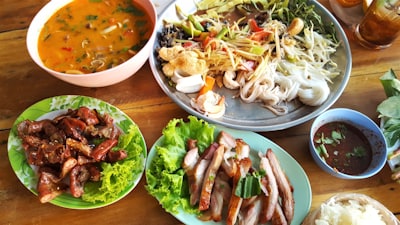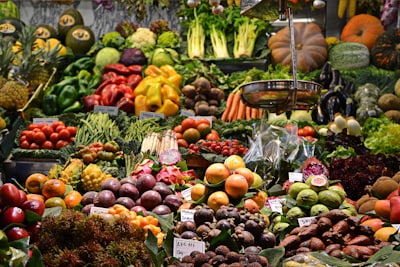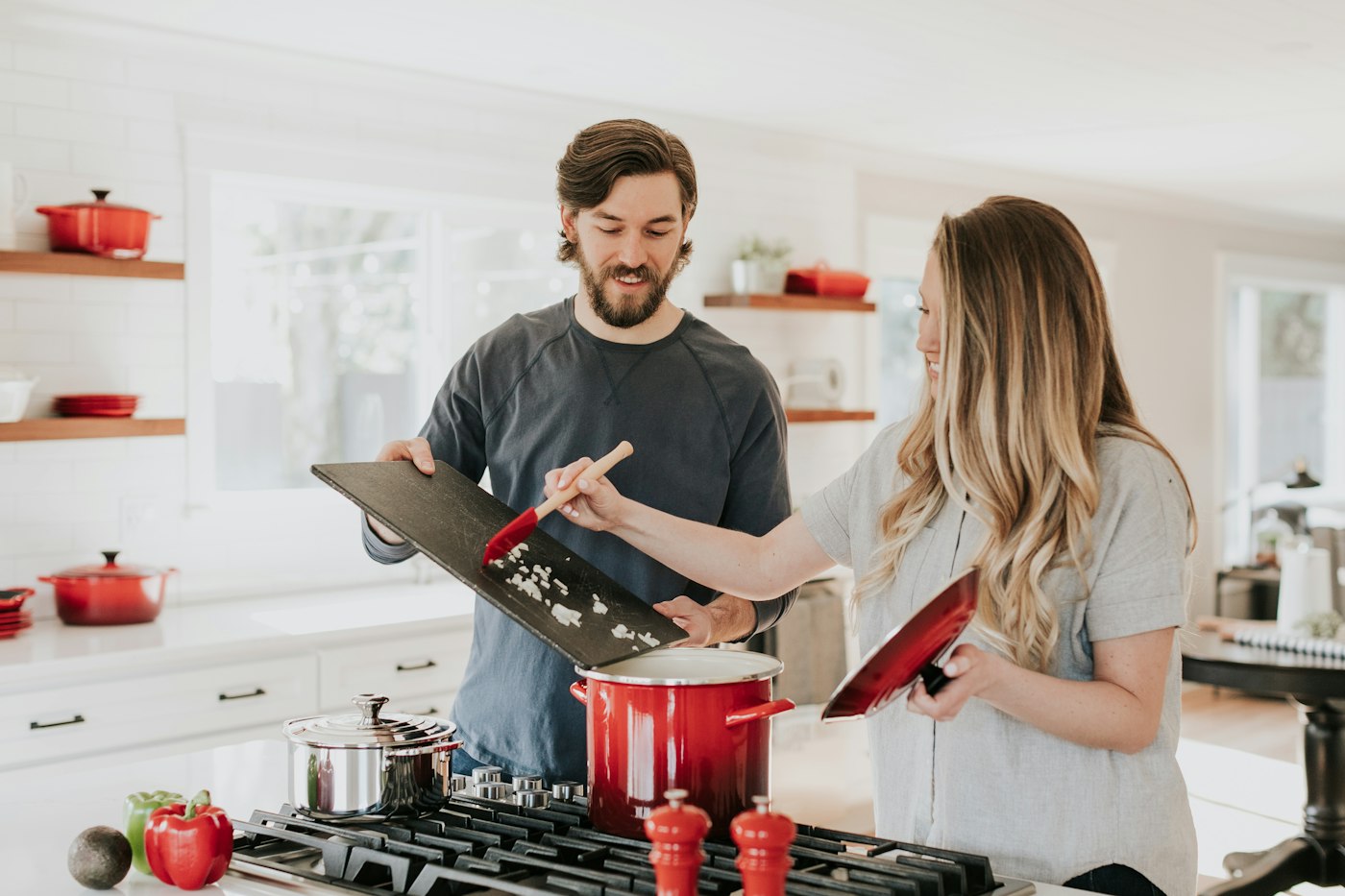
Six years in Phuket and I still get excited about food. The island's culinary scene is genuinely rich — not just pad thai and green curry, but a whole Hokkien-influenced Phuket tradition that most visitors never discover. Learning to cook Thai food here isn't just a tourist activity — it's one of the most genuinely useful skills you can develop as a long-term resident. Fresh ingredients are everywhere, markets are open every morning, and once you understand the fundamentals of Thai cooking, you'll eat better and spend far less on restaurants.
Quick Facts
- Half-day cooking classes: 1,200–2,500 THB per person, usually including market tour
- Private classes: 3,000–6,000 THB
- Phuket has its own unique culinary tradition distinct from Bangkok-style Thai food
- All fresh Thai herbs and spices readily available at local markets for near-nothing
- Classes run by local chefs, resort kitchens, and independent cooking schools
- Most classes are half-day: morning market visit + 3–4 hours cooking + lunch
Why Phuket is One of the Best Places to Learn Thai Cooking
Most people take a cooking class in Chiang Mai. Phuket's culinary class scene is more intimate, more focused on southern Thai and Phuket-specific cooking, and benefits from the island's extraordinary fresh seafood and produce. Where Chiang Mai cooking is famous for northern-style dishes, Phuket cooking reflects the southern Thai tradition — heavier on seafood, coconut milk, and the pungent flavours of fresh turmeric and wild betel leaves. Add the distinctive Hokkien Chinese influence from generations of Peranakan settlers, and you have a genuinely unique culinary tradition worth learning.
Practically speaking, the ingredients you learn to work with here are the ones you'll find in the markets around you every day. The whole point of a cooking class as an expat isn't just a fun afternoon — it's acquiring skills you'll actually use in your daily life. Fresh kaffir lime leaves from the market near Chalong, lemongrass from the morning market in Rawai, proper Thai basil from the Jungceylon market in Patong — once you know what to do with them, grocery shopping in Phuket becomes its own kind of pleasure.
Types of Thai Cooking Classes in Phuket
Market-to-Table Half-Day Classes
This is the most common and most popular format. You meet your instructor early morning (typically 8–9am), visit a local wet market together — usually the Phuket Produce Market (Talad Kaset) in Phuket Town, or the Chao Fa Market in Chalong — learning to identify and select fresh ingredients. Then you move to the cooking school kitchen for 3–4 hours of hands-on cooking, making 4–6 dishes. The class ends with eating everything you've cooked — usually around noon. Cost: 1,200–2,500 THB per person.
What makes these classes valuable as an expat (versus a tourist) is the market component. Understanding how to buy fish sauce (not all fish sauce is the same), how to choose ripe lemongrass, and which stall has the best fresh galangal — this is genuinely useful day-to-day knowledge.
Phuket-Specific Cuisine Classes
A smaller number of cooking schools focus specifically on Phuket's unique culinary tradition rather than generic Thai cooking. These are worth seeking out if you want to go beyond pad thai and green curry. Phuket-specific dishes to look for in class syllabuses:
- Mee hokkien Phuket — thick Hokkien noodles in a rich pork and prawn broth, distinctly different from other Thai noodle dishes
- O-tao — Phuket's oyster omelette, made with small oysters, rice flour, and eggs — a Hokkien street food staple
- Gaeng massaman — southern massaman curry, richer and more complex than Bangkok versions, using local dry spices
- Tom kha gai with Phuket galangal — Phuket's galangal (kha) is notably more aromatic than what you find in Bangkok
- Pad mee korat — a dry noodle dish more common in southern Thailand
- Mango sticky rice variations — with Phuket's extraordinary mango quality during peak season (March–June)
Resort and Hotel Cooking Classes
Several of Phuket's upscale resorts — particularly in Bang Tao and Surin — offer cooking classes open to non-guests. These tend to be more expensive (3,500–5,500 THB) but offer premium kitchen facilities, smaller class sizes, and excellent presentation. The Laguna area has several resorts with well-regarded cooking programmes. The quality of instruction varies — check reviews specifically for the cooking programme rather than the resort generally.
Private One-on-One Instruction
For expats who want to develop genuine cooking skills rather than just have a tourist experience, private instruction is worth considering. Several professional Thai chefs and experienced home cooks in Phuket offer private lessons — often tailored specifically to your existing skill level and the dishes you want to learn. Check the Phuket Expats Facebook group and Airbnb Experiences for current listings. Prices run 3,000–6,000 THB for a private session, but the learning is significantly deeper than a group class.
| Class Type | Typical Cost | Duration | Best For |
|---|---|---|---|
| Market-to-table group class | 1,200–2,500 THB/person | Half-day (5–6 hrs) | First-timers, tourist-expat combo |
| Phuket-specific cuisine class | 1,500–3,000 THB/person | Half-day | Those wanting genuine Phuket culinary tradition |
| Resort cooking class | 3,500–5,500 THB/person | Half-day to full-day | Premium experience, small groups |
| Private instruction | 3,000–6,000 THB/session | 3–5 hours | Serious skill development, customised content |
| Online Thai cooking course | 500–2,000 THB one-off | Self-paced | Ongoing learning at home |
Shopping for Thai Cooking Ingredients in Phuket
One of the great joys of cooking Thai food while living in Phuket is the ingredient access. Everything you need — and I mean everything — is available fresh, local, and cheap. A few practical notes on where to find what:
The Best Markets for Fresh Ingredients
Chao Fa Market (Chalong) — my personal favourite for everyday cooking ingredients. Open daily from around 5am to noon. Excellent selection of fresh herbs, vegetables, fresh tofu, seafood, and meat. Very local, minimal tourist presence, prices are genuinely market-rate. Worth the early wake-up. The seafood section has fresh catch from local boats most mornings.
Phuket Produce Market (Talad Kaset, Phuket Town) — the main wholesale and retail produce market in Phuket City. Larger than most neighbourhood markets, with an exceptional range of fresh herbs, unusual vegetables, and specialty ingredients. The Chinese grocery stalls here carry fermented ingredients, dried mushrooms, and Hokkien cooking essentials that you'd struggle to find elsewhere on the island.
Bang Tao Market (near Cherng Talay) — well-stocked local market serving the northern expat community. Good for daily fresh ingredients without driving to Phuket Town. Reasonable prices, friendly vendors.
Learn a few basic Thai words for the market: เผ็ด (phet) = spicy, ไม่เผ็ด (mai phet) = not spicy, สด (sot) = fresh, ราคาเท่าไหร่ (raka thaorai) = how much? Even halting Thai gets you better prices and friendlier service than English alone.
Specialty Stores for International Cooking Needs
If you cook cuisines beyond Thai, Villa Market in Cherng Talay carries an excellent range of imported goods — quality olive oil, European cheeses, specialty flours, and international condiments. Makro (requires a free membership card) in Phuket City is the wholesale store used by restaurants — great for bulk buying staples and sauces at low prices. For Japanese, Korean, and Chinese ingredients, there are specialist grocery stores in Phuket Town's Ranong Road area.
Want personalised Phuket food and lifestyle recommendations?
We know the island well. Ask us about the best markets, cooking classes, and restaurants for your specific tastes.
Ask us anything — first question is free →Cooking Thai Food at Home: Getting Started
Once you've done a class or two, the real learning happens in your own kitchen. A few fundamentals that make Thai home cooking achievable:
- Wok hei — the slightly charred, smoky flavour from high-heat wok cooking. You need a gas burner and a well-seasoned carbon steel wok. Gas is standard in most Phuket villa kitchens; if you're in an apartment with electric, the results will always be slightly less authentic.
- Fish sauce quality matters — Tiparos or Megachef brands are what most serious Thai home cooks use in Phuket. The cheap versions from minimart have a much harsher flavour.
- Fresh vs. dried herbs — for kaffir lime leaves, lemongrass, and galangal, fresh is always better in Phuket because fresh is always available. Don't use dried versions when you live 10 minutes from a market with the real thing.
- Palm sugar — the mild, caramel sweetness in many Thai dishes comes from palm sugar (น้ำตาลปี๊บ — namtaan pip), not regular cane sugar. Available at every market for about 40 THB/block.
- Good curry paste — making your own is deeply satisfying and worth doing in class. For weeknight cooking, Maesri brand curry pastes from Makro are what restaurant kitchens use when they're short on time.
For continuing your learning beyond classes, the best Thai restaurants in Phuket are worth eating at analytically — ordering dishes and tasting carefully to understand the flavour balance you're trying to replicate. The gap between good restaurant Thai food and competent home cooking in Phuket is much smaller than most people think; it's primarily a matter of ingredient quality and technique, both of which are accessible here.
Moving to Phuket? Transfer money the smart way.
Pay for cooking classes, market shopping, and daily expenses without losing money to poor exchange rates. Wise gives you the real exchange rate with low fees.
🏝️ Getting ready to relocate to Phuket? Our free checklist covers everything from visas to setting up your kitchen — the complete Phuket relocation roadmap.
Get free checklist →